Product direction and design · community health, an AI incubation studio · 2024
A voice assistant that makes the first call, picks up rising risk and hands structured context to a community health worker.
The funded plan was an AI co-pilot for community health workers: one more screen in a day already split across tools, and it only helped when someone thought to ask. I interviewed the workers, advanced care practitioners and primary care physicians, mapped their workflows and tested early concepts before the team built anything.
- Decision
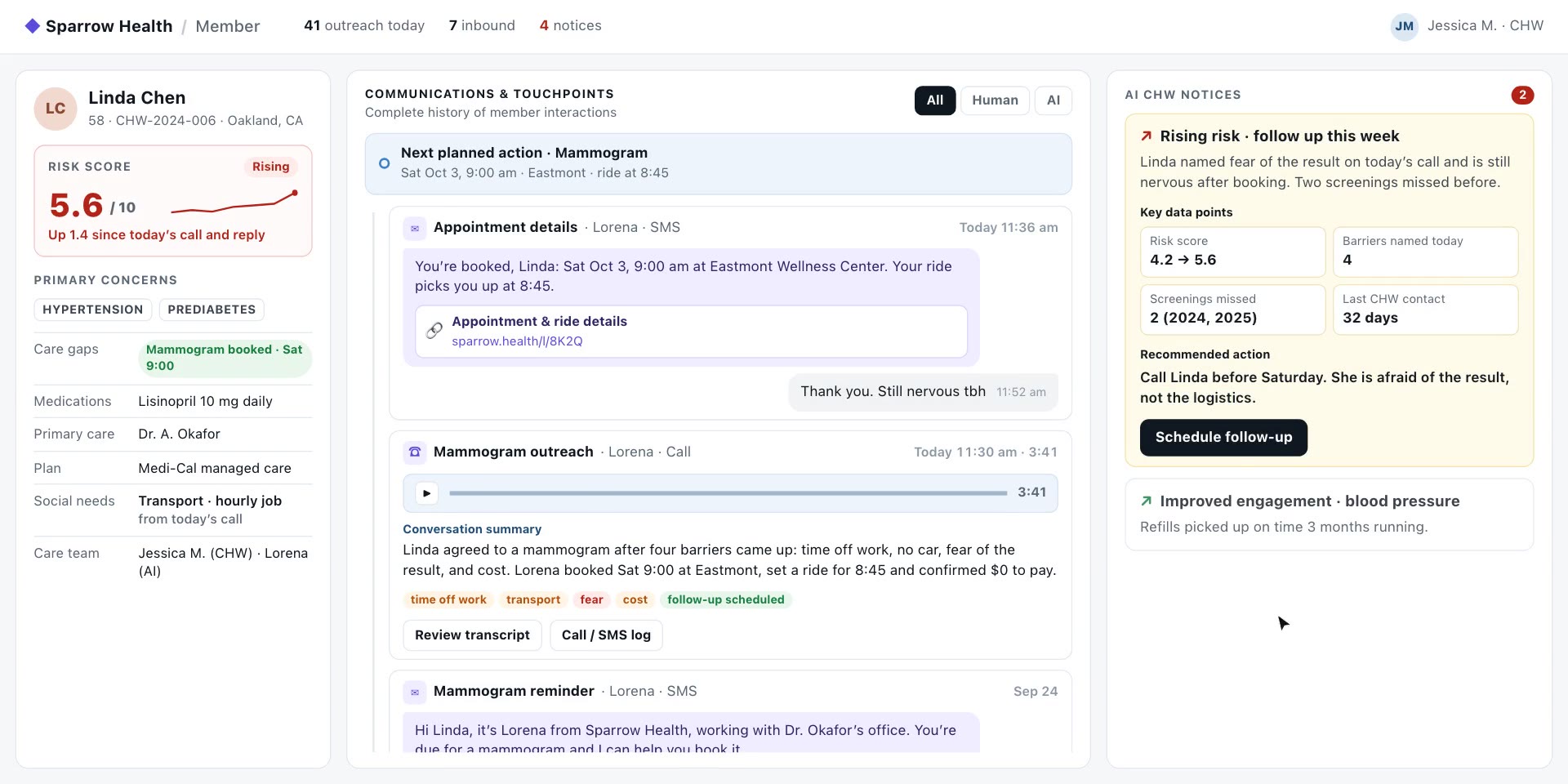
The co-pilot was dropped before build. The product became a voice assistant that does the first-pass work before it reaches a person: outreach, check-ins and intake, with escalation, correction and judgment staying with the community health worker.
The voice, transcription and retrieval layer built for it became shared infrastructure across the studio’s other healthcare products.
- What I did
- User research with community health workers, advanced care practitioners and physicians, workflow mapping, concept testing, product direction, prototyping, and the voice and handoff design.
- Role
- I redrew the product around outreach and intake, designed the system behavior, the feedback loop and the handoff model, and prototyped the calls, the transcript review and the member dashboard.