Product direction and design · supply-chain security · 2025
Two command-line tools for dependency and origin risk, turned into a product a security engineer can open, run and understand without the person who built them.
The team had two command-line tools for dependency and origin risk. Using them, or demonstrating them to a new user, still required the engineer who built them.
- Decision
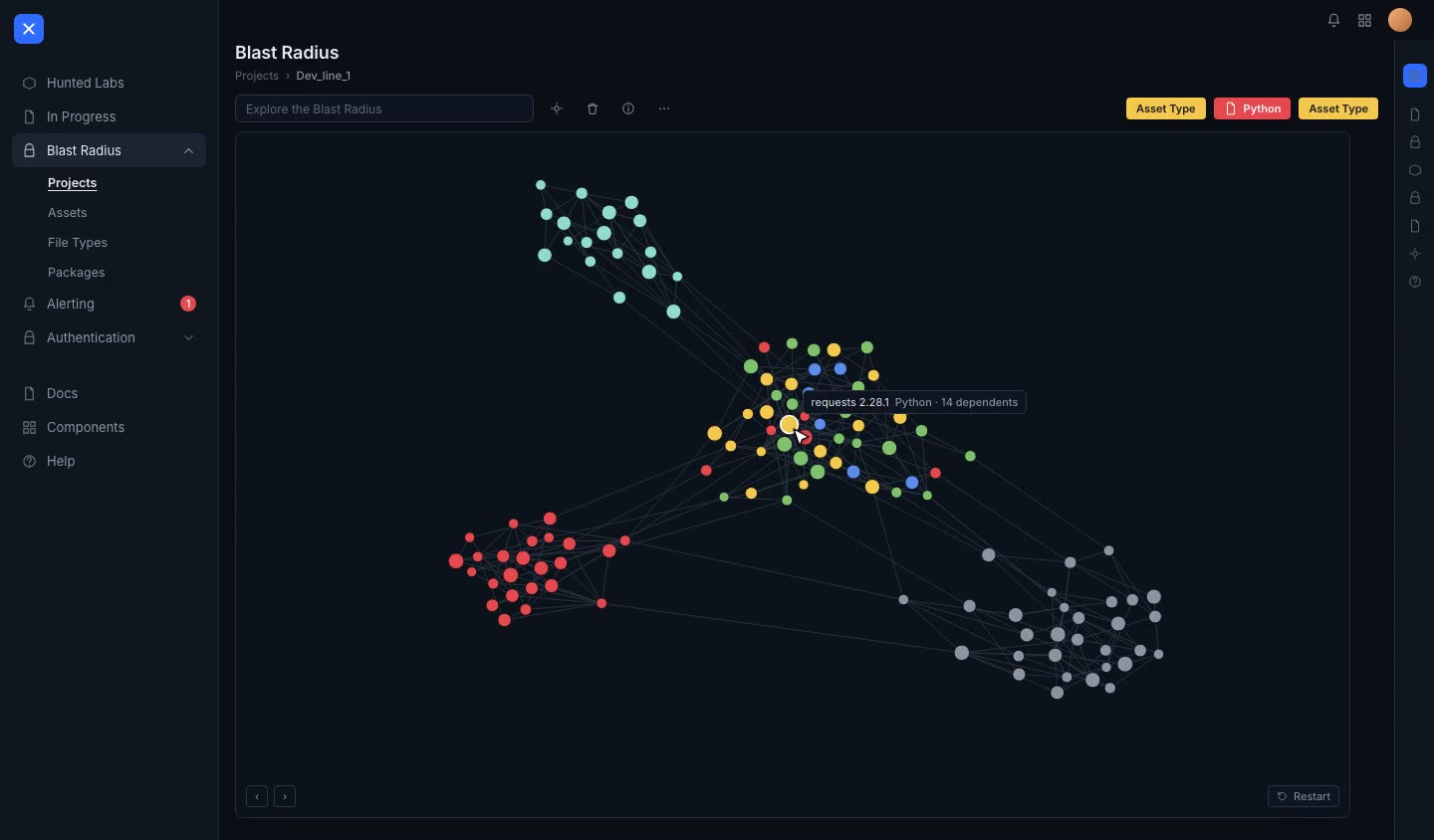
I redesigned the tools as a navigable product rather than placing a thin interface over the existing command line.
The design system carried into the team’s later products. The company’s numbers: a $3M pre-seed in March 2025 and a $1.79M AFWERX SBIR.
- What I did
- User research with security engineers, CISOs, UX design, information architecture, design system, and prototyping.
- Role
- I ran working sessions and prototype reviews with security engineers, then designed the information architecture, blast-radius workflow, interaction prototypes, and design system.