UX design, systems and prototyping · Amtrak’s national booking product · 2017–2019
A booking flow that starts with the traveler’s trip, and a seat map travelers could choose from before boarding.
Amtrak’s booking flow followed internal system logic more closely than traveler intent. The move to Adobe Experience Manager created the opportunity to redesign the booking experience while the platform foundation was being rebuilt.
- Decision
The redesigned flow starts with the traveler’s trip and keeps system constraints in the background until they matter.
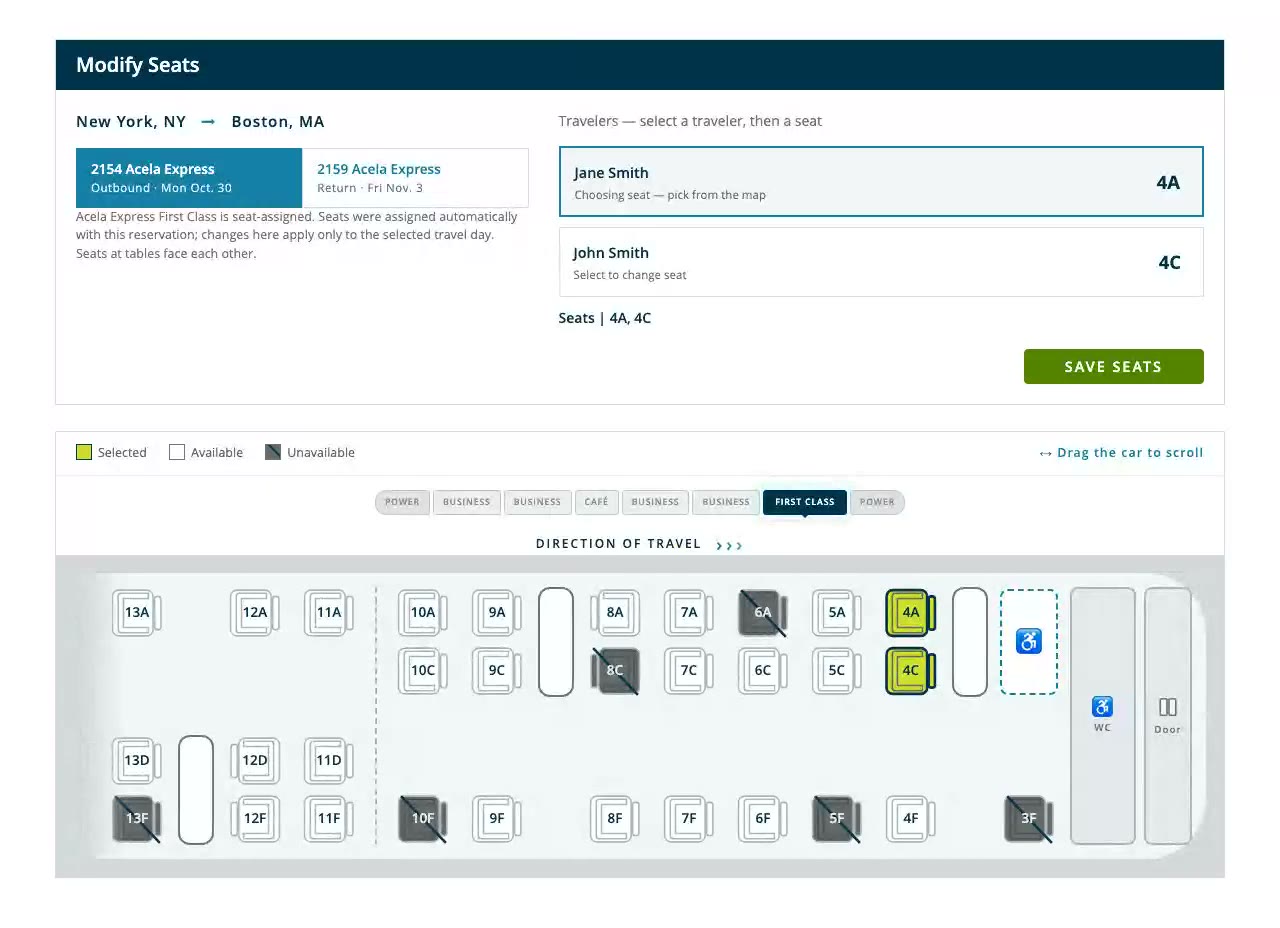
Amtrak had not shown travelers a seat before boarding. Seat selection launched as a new capability: the map I drew from rolling stock blueprints served travelers and conductors managing assignments in real time, rotating with the direction of travel.
- What I did
- UX design, intent mapping, prototyping, customer testing, A/B test design, and the cross platform design system.
- Role
- I mapped what travelers wanted against what the system asked for, redesigned search, selection and checkout end to end, drew the seat map, built the prototypes we tested with customers across devices, and set up the atomic design system engineering and contractors worked from.