01 — Nail Trap
The hammer-looking-for-a-nail trap is still the default failure mode.
Every wave of tooling revives the same mistake: bolt intelligence onto a workflow that never needed it. The utility-bill chatbot—AI stapled onto a PDF upload no one asked for—is the meme because it is true. Novelty without a problem is still shipping.
The opposite mistake is treating AI as decoration on top of a product you have not validated. In incubation work I use models to widen the problem space early: more interview synthesis, more edge cases surfaced, more ways to ask whether the wedge is real. That is compression on the expensive part—figuring out what should exist before build spend hardens the wrong thing.
The teams that win with AI in design are not the teams that generate the most screens. They are the teams that shorten the path from hunch to disconfirming evidence.
02 — Sort the Board
Discovery belongs to the strategist—the machine sorts the corkboard.
Structured discovery with AI looks less like magic generation and more like a cybernetic teammate: you set the rules, you own the purse strings, the model sorts and retrieves.
In care-adjacent voice work, a cough during a date-of-birth prompt is not a color-token problem. It is a conversational failure state. If your discovery artifacts never reach those moments, UI polish will not save you.
Experience engineering is the same lesson from another angle: an airline app can be beautiful and still fail when the boarding pass does not work offline. Fake depth is a category error—the interface performs confidence the system does not possess.
03 — Taste Is the Job
When the wall between design and code thins, taste becomes the job.
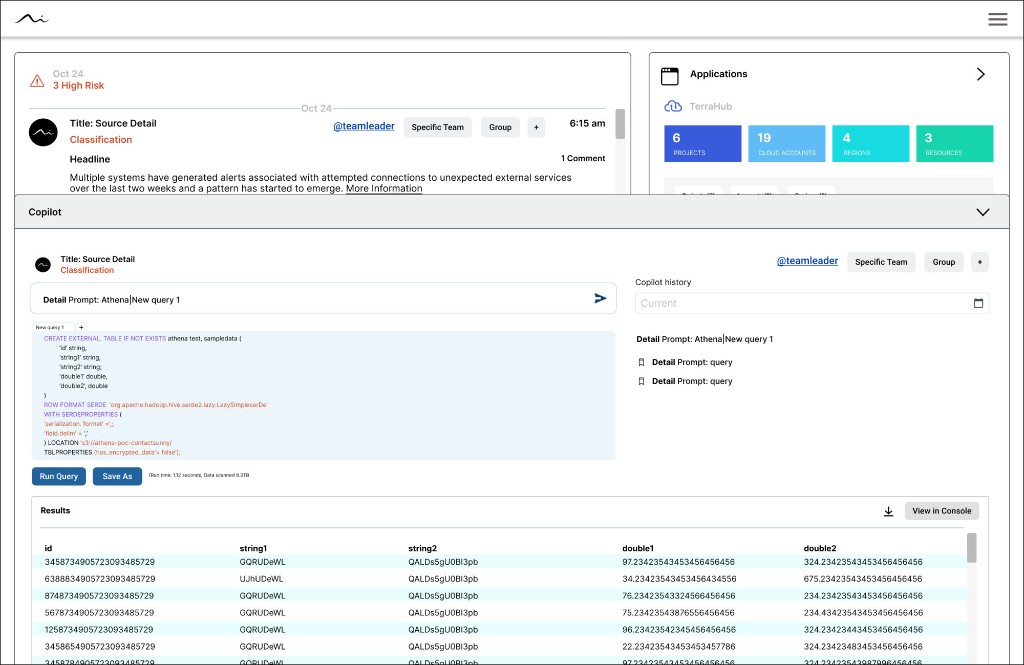
Agentic coding and design-to-code bridges change the throughput of screens—and they surface hallucinated UX faster. In security-adjacent incubation work, impressive feed surfaces can ship before the workflow underneath is proven. Submit buttons that do not save. Screens that look finished in a review and fall apart on first use.
The leverage is not screens per hour. It is systems: being the auditor who asks whether the behavior is real, whether the workflow owns the turn, whether the demo implies infrastructure you have not built.
Tooling that connects design systems to code is useful when it preserves semantics. It is dangerous when it launders a fake workflow into production because nobody asked whether the save path exists.
04 — Validation Failure
Fake products are a validation failure, not a branding problem.
A fake product is not an ugly MVP. It is a story that impersonates a working system—polished narrative, missing spine. Partners and users detect that gap at different speeds, but they detect it.
The honest alternative is lean in the original sense: smallest behavior that can learn, labeled uncertainty, kill criteria written before the pivot deck. AI makes the sketch cheap. It does not make the judgment cheap.
If you are using AI in design, ask what would break if the model were wrong tomorrow. If the answer is nothing, you are not building faster—you are performing faster.